
- Product label: Sold out
ふくべ窯
Tsubaki 20cm Rim Plate


Description
[Handling instructions]
- Please avoid using the pan for heating oily foods or for long periods of time, as this may cause cracks.
- Avoid sudden temperature changes as this may cause damage.
For example, putting something in cold water immediately after immersing it in hot water, or pouring hot water over a chilled container. - Please use a soft sponge as scrubbing hard with abrasives, cleansers, or metal scrubbers may scratch the surface.
- If cracks or fissures appear, discontinue use.
- There is no need to seal the porcelain, but due to the nature of the glaze, food stains such as tea stains will soak in.
You can remove some stains with kitchen bleach.
Before Use
- Material: Stoneware
- Diameter approx. 20cm
- Height: Approx. 2cm
- No need to seal
- Microwave safe
- Dishwasher safe
- Oven unusable
- Do not use on direct flame
Some aspects, such as shape, distortion, texture, and color, may not be clearly visible in the image.
Please note that these dishes are handmade items, each made by an artist.
There are some areas where iron powder (black dots) is visible, which is caused by the iron in the clay oxidizing during firing.
Also, small dents (pinholes) may be found, but these are natural occurrences during the firing process and are not considered defective products.
Please enjoy it as one of the flavors.
Please refer to the description for handling instructions.
A generous and elegant rim plate that goes well with any dish.
A soft camellia in white and light brown on a black background.
It has a cheerful atmosphere, but also a dignified feel.
Stoneware is pottery made from yellow clay.
The beige part of the dish is the base color.
The works by Fukube Kiln that we will be introducing this time are all pieces that make use of the subdued colors of the base material, without deliberately erasing them with glazes or decorative clay.
The paintings, which are done using a generous amount of decorative clay, are so plump that you'll want to touch them.
Fukube Kiln's tableware inherits the techniques of stoneware that were discontinued 50 years ago, while featuring warm designs that suit modern lifestyles.
Bread and cakes
Sauté or grill.
Great for everyday Japanese dishes such as stir-fries and inari sushi
The chic design and calming ochre color blend into everyday life regardless of the type of food, creating a gorgeous dining table.
A soft camellia in white and light brown on a black background.
It has a cheerful atmosphere, but also a dignified feel.
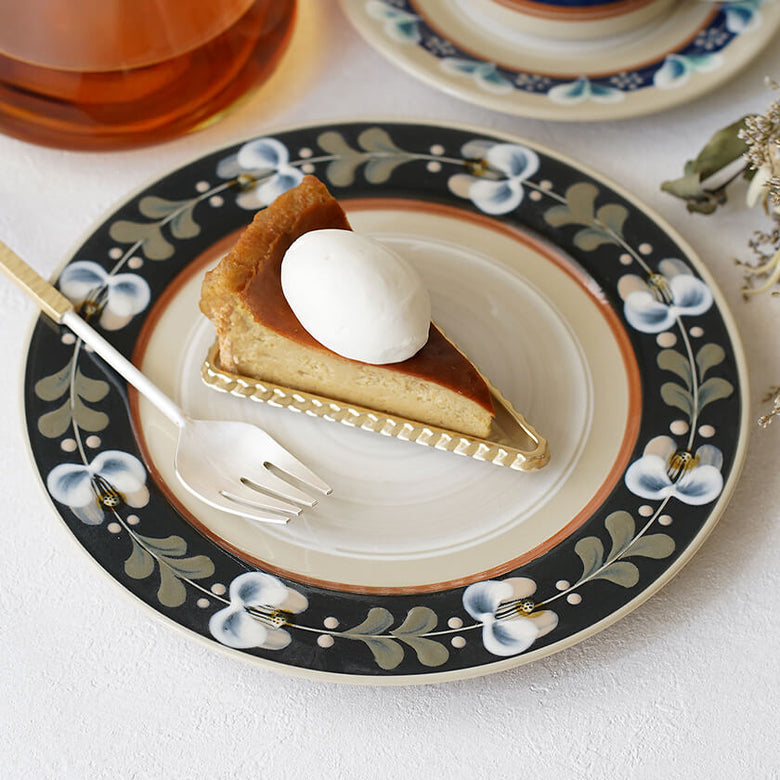
Stoneware is pottery made from yellow clay.
The beige part of the dish is the base color.
The works by Fukube Kiln that we will be introducing this time are all pieces that make use of the subdued colors of the base material, without deliberately erasing them with glazes or decorative clay.
The paintings, which are done using a generous amount of decorative clay, are so plump that you'll want to touch them.
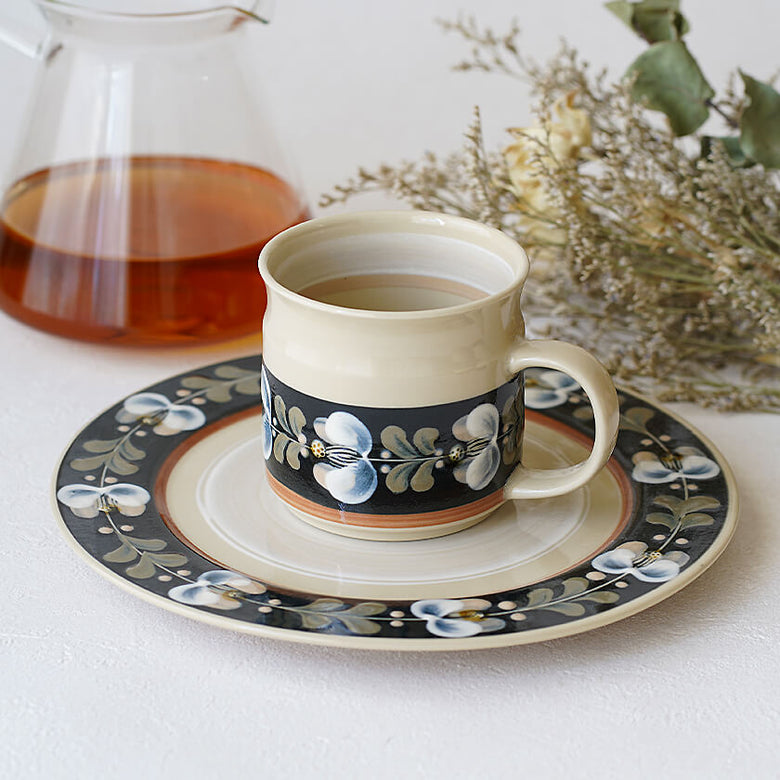
Fukube Kiln's tableware inherits the techniques of stoneware that were discontinued 50 years ago, while featuring warm designs that suit modern lifestyles.
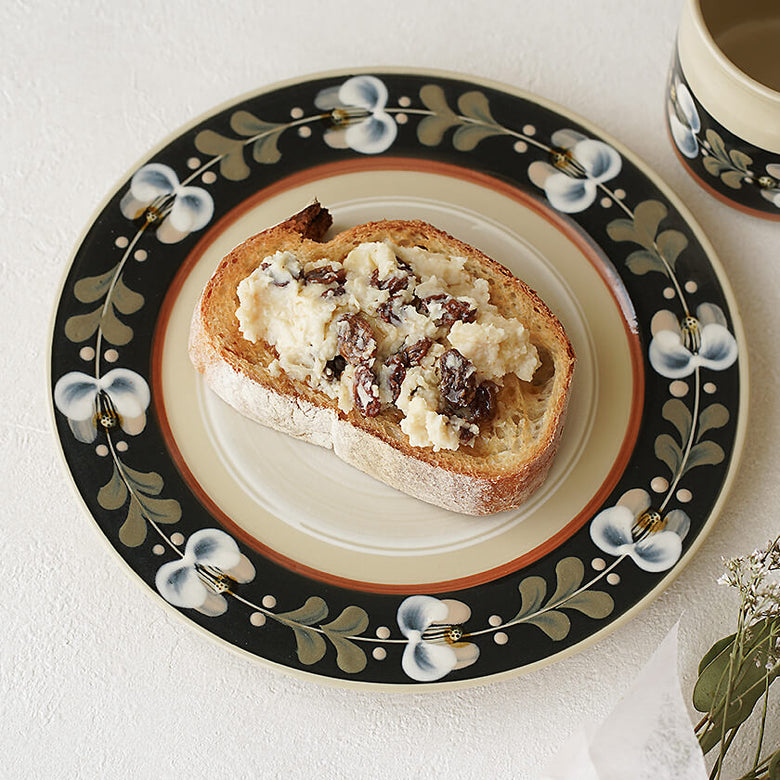
Bread and cakes
Sauté or grill.
Great for everyday Japanese dishes such as stir-fries and inari sushi
The chic design and calming ochre color blend into everyday life regardless of the type of food, creating a gorgeous dining table.
recommendations
Recently viewed


Fukube Kiln
Masaaki Tsurugi and Masumi Tsurugi
Fukube Kiln produces fine stoneware in Toki City, Gifu Prefecture.
They are a married couple who work together.
The name Fukube Kiln comes from the fact that the owner's wife, Masumi, loves gourds.
"When I was little, I loved the dorayaki called Sennari sold at a Japanese confectionery shop in Nagoya.
That may be why I became fond of gourds. The shape of the gourd is cute and considered auspicious, so the gourd is also known as Fukube Kiln."
This is a heartwarming story that is typical of Fukube Kiln.
The paintings they create have a deep design that reflects the softness of the decorative clay, and they exude a gentle, enveloping generosity.
The two artists are working to preserve this technique, which is in danger of disappearing, by painting the pieces molded by Sone Yoji of Shofu Kiln using traditional stoneware techniques.
"Stoneware is not well known even in Mino. I hope that many people will be able to experience the charm of this beautiful, historic pottery."